“Buenos días, ¿como amaneció?” This is the common greeting in Medellín, Colombia’s second-largest city, nestled in the Aburrá Valley. With a population of 2.6 million, Medellín is affectionately known as the “City of Eternal Spring.” While it boasts a strong textile and energy industry, it has also grappled with the shadow of the infamous Pablo Escobar and the drug trade. For a tourist, navigating the city’s intricate urban codes that distinguish neighborhoods and their levels of safety can be challenging. However, Medellín has come a long way in reducing violence, with a lower rate of violent deaths compared to the Colombian average, as of 2014.
A History of Struggles: The city experienced significant economic growth starting in the 1920s. However, the 1970s brought a crisis leading to high unemployment, which in turn fueled the drug trade and the creation of the Medellín Cartel in 1976. The extradition agreement with the United States triggered a violent war between drug traffickers and the central government in the late 1980s and early 1990s. After Pablo Escobar’s death in 1993, various guerrilla and paramilitary groups continued to thrive, aiming to control the flow of drugs and minerals to the Caribbean coast. This led to a mass exodus from rural areas to the city. In the 1980s, illegal settlements sprang up in the peripheral neighborhood of San Javier, now known as Comuna 13. The government attempted interventions, such as the controversial Operation Orion in October 2002, which resulted in an indeterminate number of deaths.
Investing in Transformation: Today, investments are being made to promote social inclusion and reduce urban violence. Initiatives include park libraries, educational centers, and improvements to urban transportation with the metro, Metroplus, and cable cars. However, beneath the surface of daily life, a sense of tension still lingers.
Visiting Comuna 13: Most city tours include a visit to Comuna 13. These tours are conducted during the day, led by local guides, and follow predefined routes. The visited area is relatively commercial, with clothing stores, souvenir shops, exhibition spaces, and museums showcasing the history of the community. You’ll also encounter rap musicians, dance groups, and plenty of music. Crime is virtually non-existent in this area, thanks to the constant flow of visitors. The aim is to make tourists feel safe. However, beneath the veneer of a pacified neighborhood, a certain tension remains palpable.
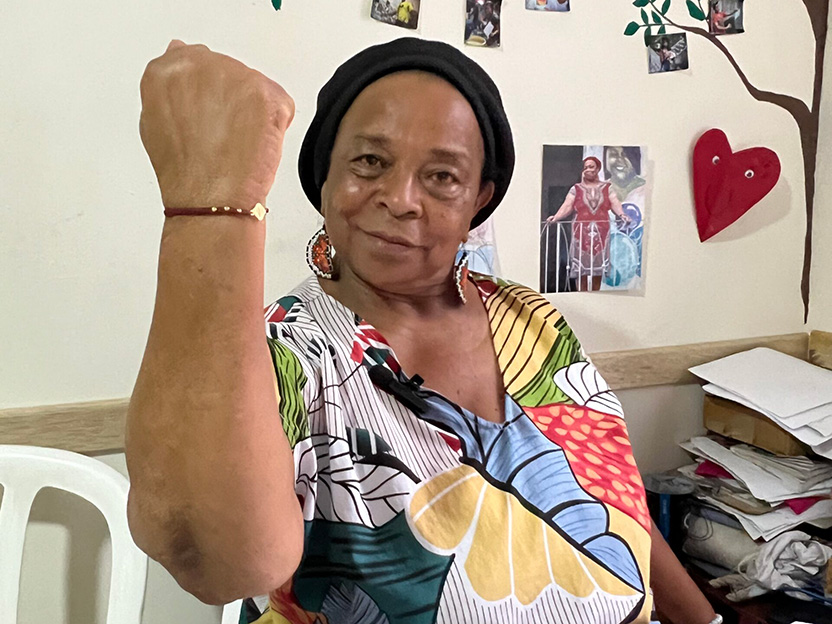
AMI – Association of Women for Independence: One of the remarkable aspects of Comuna 13 is the presence of the Association of Women for Independence (AMI). When I arrived in the area, I had heard about AMI and sought them out. Mery Naranjo was the first person I spoke to, followed by Socorro Mosquera. These two women have been friends and collaborators for 30 years. Socorro, in particular, has been at the forefront of many battles, leaving an indelible mark. In 2002, during Operation Mariscal in Comuna 13 (a confrontation between official power and guerrillas/paramilitaries), Socorro took to the streets with a white handkerchief, shouting “Cese el fuego!” (Ceasefire!). Hundreds joined her in an attempt to quell the violence, despite being fired upon. Following this, the leaders of AMI were arrested, threatened, and one was tragically killed. The rest went into hiding. Once the association was established, they organized to provide assistance, primarily to women and children who were victims of violence and abuse in extreme situations. They offered temporary shelters, training workshops, and guidance toward relevant public services.
A Beacon of Hope: I had the opportunity to visit the non-touristic part of Comuna 13 with Socorro. It was truly impressive to witness how everyone knew her and greeted her warmly. Children ran to her, women confided in her about their concerns. Even a blind man recognized her voice. This once strong and independent man now relies entirely on the help of his neighbors. He clung to Socorro, and both shed tears.
We visited Silvia’s home. She had fled a violent situation with her 9-year-old daughter, who has special needs. The child cannot be left alone and needs constant care. They were saving money to buy a second-hand refrigerator, hoping to improve their quality of life. It’s stories like these that highlight the sheer resilience of the people here. In this environment, Socorro is like a beacon of hope, respected and revered by the community. At this stage of her life, she lives for the community, constantly seeking ways to obtain help and deliver it directly to those in need. Her strength is immeasurable, and she is a staunch advocate for the power of women.
In her own words, “Sin la voz de la mujer, la verdad no está completa” (Without the voice of women, the truth is incomplete). Socorro Mosquera Londoño is a living testament to the transformative power of dedicated individuals in communities like Comuna 13.
Conclusion: Medellín may have a complex history, but it’s a city in the process of rebirth and rejuvenation. Comuna 13, with its inspiring organizations like AMI and individuals like Socorro Mosquera, exemplifies the resilience and spirit of its people. The city’s progress serves as a testament to the belief that positive change is possible, even in the face of adversity.