Have you ever felt like Indiana Jones, ready to embark on an adventure of a lifetime? Well, that’s exactly how I felt when I first heard about the Lost City, or Ciudad Perdida, in Colombia. This archaeological marvel, shrouded in centuries of mystery, called out to me. I knew I had to experience it for myself, and so I did.
Exploring Ciudad Perdida with Expotur: My journey to Ciudad Perdida began with the reputable agency, Expotur. They are one of the few licensed to operate in the region, which is home to indigenous communities such as the Kogui, Wiwa, Arhuaco, and Kankuamo. The Lost City, believed to have been built around the 8th century by the Tayrona indigenous people and abandoned in 1650, is considered one of Colombia’s most significant archaeological sites. Although it was discovered in 1976, it was only opened to tourists in 2005.
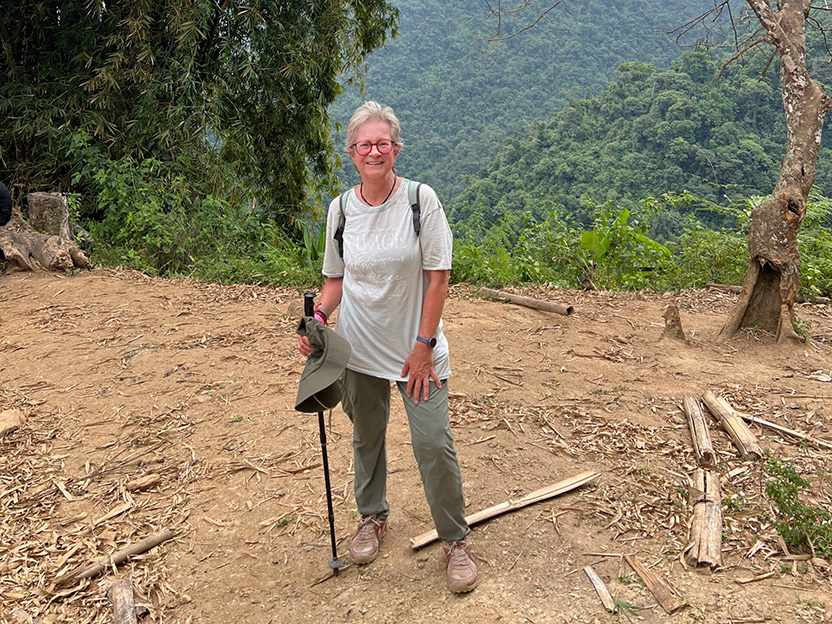
Trekking Through the Jungle: The adventure started with a trek lasting 4-5 days. We followed a fixed schedule, rising at 5 a.m. every day to begin our journey after breakfast at 6 a.m. The path was narrow, winding through the lush jungle, surrounded by the sounds of birds and insects. Occasionally, we encountered indigenous riders with mules, small villages, hanging bridges, and the humidity and heat of the rainforest. We trekked uphill and downhill, carrying all our gear on our backs, as there was no other mode of transportation. Thankfully, the Expotur team provided a porter to assist us.
Mysterious Arrival at Ciudad Perdida: By the time we arrived at Ciudad Perdida on the third day, a thick mist enveloped everything. Trees and terraces vanished into the clouds, and we were all drenched in sweat from climbing the 1,200 stairs. However, our Expotur team had a surprise in store. They treated us to trays of fresh fruits, pastries, and nuts. As we savored this unexpected feast, the mist gradually lifted, revealing a breathtaking landscape.
Walking Among Ancient Terraces: We explored the terraces, listened to our guide’s explanations, and even had the opportunity to meet the daughter of a shaman. It all felt surreal, as if we had stepped back in time. I couldn’t help but feel a sense of pride and accomplishment for completing this challenging trek. While it’s essential to be in good physical shape, I was amazed to see individuals over 50 years old making the journey.
Interacting with Indigenous Communities: The territories we crossed belong to indigenous communities, and they are the ones who grant passage and manage the infrastructure along the way. While the facilities are somewhat rudimentary, consisting mainly of dormitories with bunk beds, they are part of an authentic experience. Since there’s no transportation to Ciudad Perdida, food is transported in sacks and boxes carried by mules and prepared on-site in kitchens set up by the tour agencies.
Disconnecting from the World: During the trek, there’s no internet, and the generator-powered lights go out at 9 p.m. It’s a time to listen to the nocturnal jungle sounds, though one can’t help but hope not to encounter a jaguar during nighttime trips to the bathroom. The morning chorus of jungle birds deserves an article of its own.
A Different Perspective on the Return: For the return journey on the last day, I opted to ride a mule, an unusual choice but one that allowed me to enjoy the landscape from a different perspective.
Thank You, Expotur Team: I am immensely grateful to the fantastic Expotur team, including Angie, Camacho, Luis, Elber, Pique, and the others. They made this challenging expedition even more rewarding.
Conclusion: And so, I discovered the Lost City, concluding my journey through Latin America. This adventure taught me valuable lessons. It reminded me of the richness of the Spanish language, where words can have different meanings depending on the context. It also highlighted the importance of being street-smart, especially when exploring unfamiliar environments.
Moreover, my experiences emphasized the incredible power and generosity of women in society and the detrimental effects of uncontrolled tourism on cities. It’s clear that collaboration with indigenous populations is complex, and the slogan “Tourism, Peace, Coexistence” encompasses the three essential pillars needed for the prosperity of all.
But there’s one lesson I didn’t learn – the importance of going to bed early. Sometimes, the allure of adventure keeps us awake, and in the end, it’s all worth it.