“Vale un Potosí” – a phrase used to denote great wealth. After several days of traversing the snowy Bolivian Altiplano from San Pedro de Atacama, passing landscapes adorned with crimson lagoons and flocks of flamingos, herds of llamas and guanacos, and the indescribable Salar de Uyuni, I arrived in Potosí under the cover of night. Potosí, the mining capital of Bolivia, is nestled at the foot of Cerro Rico, the mountain that financed the Spanish Crown for centuries and now stands in a state of decline.
Founded in 1545, Potosí gained fame through Cerro Rico, a mountain that has yielded silver and gold, and now silver and tin, since its inception. In its early days, the silver extracted from the mines of Cerro Rico represented 50% of the silver production in Latin America, entirely exported to the Spanish Crown. The city is filled with colonial houses, with the Casa de la Moneda Museum being the most significant. Potosí, with around 250,000 inhabitants and an average altitude of 4,067 meters above sea level, recently saw the discovery of a new silver deposit just 4 kilometers from the city, as vast as the one found 500 years ago. Modern methods will be employed for its extraction, signaling a renewal for the city, while manual extraction continues on Cerro Rico.
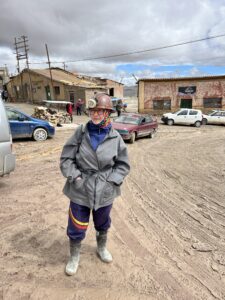
There are approximately 465 entrances to tunnels on the mountain, with about 200 currently in use. Mining in these conditions is grueling physical labor that demands immense strength. It’s hazardous to health due to particle inhalation, not to mention the risks associated with handling dynamite and tunnel collapses. Miners work in cooperatives, around 50 of them, in groups of ten, with one shareholder, 1-2 experienced individuals, and younger members starting from the age of 16, responsible for the arduous manual labor of carrying stones and carts. They work 12-hour shifts without eating, only chewing coca leaves (about 100 per day). The quality of the silver extracted today is significantly lower than in the past, resulting in meager wages. Approximately 8,000 miners work in the mines, making it the city’s primary source of income. The new mine won’t significantly impact this workforce.
Heading to Sucre: Leaving Potosí, I traveled to Sucre, Bolivia’s constitutional capital since 1839. It has been declared a UNESCO World Heritage site and boasts a population of around 280,000. Sucre exudes elegance and charm, with well-preserved colonial architecture. There are excellent restaurants and a prominent university that welcomes 47,000 students each year, offering 54 programs across 16 faculties.
Sucre’s central market is picturesque, and the city feels safe, offering plenty of leisure activities, including trips to Tarabuco, a hub of traditional weavers from the Chacabuco region. Sucre’s accommodation options are diverse and budget-friendly.
The Best Value for Money: Sucre provides a range of accommodation options, from backpacker hostels to Airbnb and hotels. Notably, the city offers excellent value for money in the hotel category. A recommendation goes to the “El Parador Santa Maria La Real Hotel,” which offers a fabulous view. Other highly rated and budget-friendly options include ON Hotel Boutique, MI pueblo Samary Hotel, and Hotel San Felipe.
The Rich Tradition of Weaving: Bolivia’s rich cultural heritage is reflected in its intricate weavings, folklore, and festivals. Indigenous communities use textiles to convey the history, traditions, and context of their culture, creating their “history books.” Cristina Bubba Zamora, owner of the Airbnb “WAZI” where I stayed (highly recommended, by the way), is a Rolex Laureate recognized for her work in recovering cultural textiles. In Carmona, she reclaimed approximately 200 pre-Columbian textiles that had mysteriously disappeared.
The Yampara Weaving Tradition in Tarabuco: The town of Tarabuco, about 65 kilometers from Sucre, hosts the largest rural market in Bolivia every Sunday. While I couldn’t visit on a Sunday, I explored Tarabuco and had the opportunity to visit the Yampara Museum of Julia Pachacopa and Casto Limachi. Nearby, in Puca Puca, I met Daisy, a highly skilled and rapid weaver in the region. The Yampara culture emphasizes communal social units called Aillu, where mutual support and shared responsibilities are key. I had fascinating conversations with Julia and Caso, who served as consultants to couples within these units.
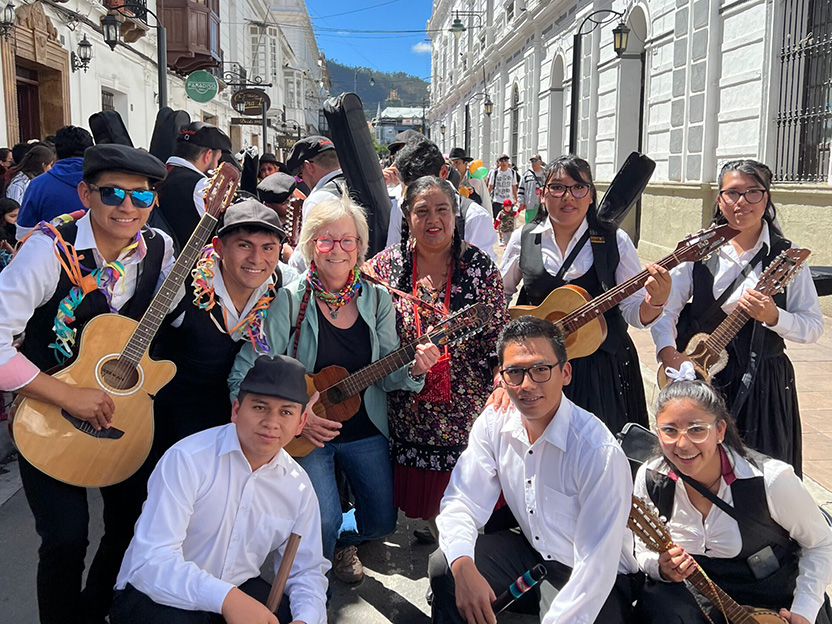
Exploring Bolivian Folklore and Origins: Bolivia’s folklore is incredibly diverse, with approximately 1,200 festivals celebrated throughout the country, showcasing rich costumes, dances, and music that reflect the fusion of cultures, races, origins, geography, and history. The Oruro Carnival, included in UNESCO’s Intangible Cultural Heritage list, is a prime example. My visit to Sucre allowed me to witness the festive atmosphere, with laughter, smiles, and playful foam fights during the carnival’s kickoff.
For a comprehensive display of Bolivia’s folklore, I attended the “Origenes” show, which has received “Best Practices” certification from local tourism authorities. During an optional dinner, professional dancers brought to life the colorful costumes and vibrant ambiance of Bolivia’s diverse regions. It’s a two-hour spectacle that brilliantly encapsulates the nation’s cultural richness.
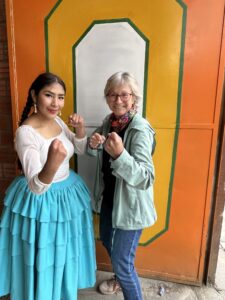
Cholitas Wrestling: Cholitas wrestling was something I had heard about but experiencing it in person was entirely different. These women are truly impressive, displaying mental strength, determination, and a paradoxical blend of femininity, confidence, and masked self-assuredness. I was initially skeptical about attending a wrestling match, fearing it might perpetuate violence, especially among women. However, watching the Cholitas in action changed my perspective. Their story is powerful – they engage in this high-risk sport for empowerment, freedom, and to inspire other women to break free from life’s constraints.
La Paz and the Wonders of Teleférico: La Paz, the world’s highest metropolis at an average altitude of 3,650 meters above sea level, is truly unique. The city’s hilly terrain can leave visitors breathless, but what truly stands out is the Teleférico system – a marvel with ten lines crisscrossing and connecting the city. It’s clean, organized, and comfortable, offering not only a convenient mode of transport but also an opportunity to engage with fellow passengers. I enjoyed it so much that I took two full rounds (each lasting about 2.5 hours) to appreciate the views and strike up conversations.
La Paz has a population of around one million, with El Alto, the neighboring city at the mountaintop, housing another 1.5 million people. El Alto is known for hosting the largest open-air market in Latin America on Thursdays and Sundays. The city’s unique appearance stems from a tax law that imposes higher taxes on finished houses (with roofs and paint). Consequently, most houses are left semi-finished, blending in perfectly with the surrounding mountains.
YouTube Channel: A Woman’s Perspective: Throughout this journey, I’ve had the privilege of meeting incredible women with remarkable stories. I’ve recorded brief interviews with them, which I will be sharing on my YouTube channel. These videos are in Spanish, and while I intend to add subtitles in the future, they currently provide a firsthand perspective from these inspiring women.
What I Learned: The freedom women enjoy in Europe is truly invaluable. I hope to see political changes in Latin America that result in greater safety and gender equality for women.
What I Didn’t Learn: I didn’t learn to gauge my physical strength accurately. The high-altitude regions of Bolivia left me fatigued, even though I didn’t experience altitude sickness. It was a unique challenge to have my physical activity limited by a lack of oxygen.
Conclusion: Bolivia has been a journey of discovery, offering a rich tapestry of culture, tradition, and resilience. From the depths of Potosí’s mines to the vibrant festivities of Sucre and La Paz, I’ve witnessed the indomitable spirit of the Bolivian people. As I continue my travels, I eagerly anticipate new experiences and stories yet to unfold. Stay tuned for more adventures and insights from the road. #BoliviaDiaries #TravelTales