It took me 20 years to get here, and my expectations were high. However, my Galápagos adventure not only met but exceeded those expectations in every way imaginable.
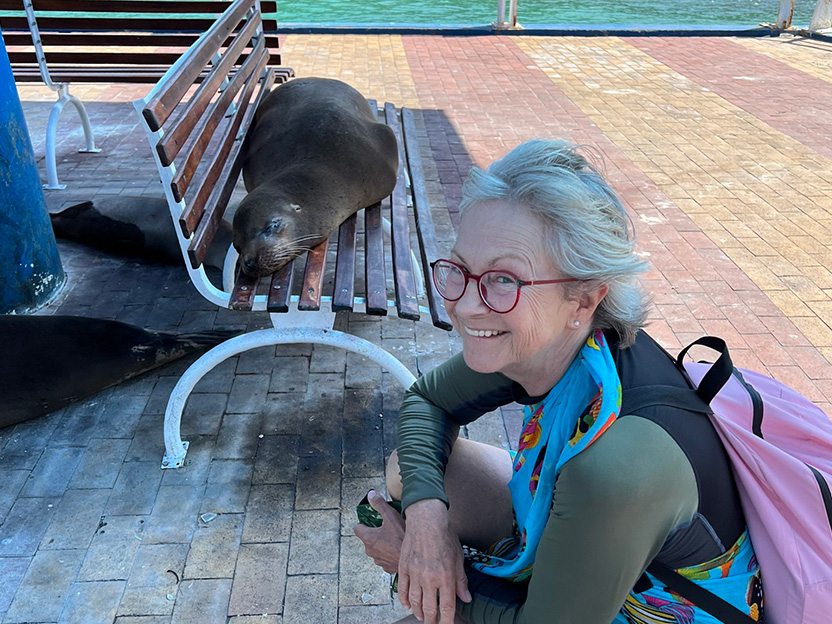
I came to Galápagos with a list of wildlife encounters I dreamed of: iguanas swimming underwater, swimming with sea lions, and witnessing schools of hammerhead sharks. And what an adventure it turned out to be! I saw over 100 hammerhead sharks, Galápagos sharks, and white-tipped sharks. There were around 40 sea turtles, iguanas, and sea lions everywhere. Plus, encounters with dolphins, eagle rays, devil rays, enormous moray eels, sea snakes, moonfish, giant parrotfish, and countless schools of fish. I saw more fish during that week of diving, especially near the Wolf and Darwin Islands, than I had seen in the past 10 years of my life.
The Natural Beauty of Galápagos: Galápagos is a true marvel of nature. The archipelago was discovered in 1535, located about a thousand kilometers west of the Ecuadorian coast, and declared a UNESCO World Heritage Site in 1978. Its unparalleled natural beauty is fiercely protected through the management of the Galápagos National Park and the marines.
Protecting the Environment: The environmental protection efforts in Galápagos are stringent. There are controls and fees (ranging from $1 to $20) for entering the archipelago, whether you arrive by plane from Quito or Guayaquil or when you visit the individual islands. Every step of the way, luggage is checked to prevent possible contamination and transmission of flora or fauna pests. The marines ensure safety at the docks and on boats by verifying passenger lists and ensuring the proper use of life jackets. They even take photos of passengers wearing life jackets.
Tourism and Conservation: Tourism is the primary economic activity in the archipelago, with up to around 250,000 visitors annually. Galápagos consists of 234 islands, 13 of which are larger than 10 square kilometers, and 19 are larger than 1 square kilometer. Santa Cruz, with its nearby international airport on Baltra Island, is the most populated. The capital is in San Cristobal, and the largest island is Isabela.
Ways to Explore Galápagos: There are three ways to explore the archipelago, depending on your interests, time, and budget:
- A) Diving Trips (Liveaboards): These week-long diving cruises typically depart from Santa Cruz/Bartolomé/Seymour. Only nine vessels have licenses to operate diving trips, and they usually accommodate a maximum of 16 passengers/divers. These trips are exclusive and can cost around €3,500 per person per week. Prices may vary depending on additional expenses like diving equipment rental (you’ll need a drysuit or 7mm wetsuit), Nitrox certification (almost mandatory for the types of dives), and tips (usually ranging from €150 to 10% of the trip’s price).
- B) Naturalist Tours: These tours of varying durations are made on boats of various sizes (including one from National Geographic). They explore multiple islands, offer snorkeling and excursions, and there are approximately 60 licensed boats.
- C) Individual Travel with Activities: You can plan your own itinerary and activities.
My Galápagos Adventure: I spent a week diving and another week relaxing on Isabela Island. My initial fear of sharks (thanks to watching “Jaws” at 17) has been a lifelong companion. But after this trip, where I encountered so many of them, I can confidently say we are not on their menu. And there were so many fish, it was exhilarating.
Galápagos’ Unique Wildlife: During my visit, I had the privilege of witnessing the courtship rituals of blue-footed boobies, with their marvelous wing displays and charmingly clumsy dance. The islands are teeming with wildlife, including albatrosses, pelicans, frigatebirds, Galápagos swallow-tailed gulls, red-footed boobies, penguins, and many more, some adapted to the volcanic landscape, even the chickens and sparrows are entirely black!
Living in a National Geographic Documentary: Living in Galápagos felt like being inside a National Geographic documentary. The marine life, the landscapes, and the unique animal behaviors were awe-inspiring.
A World of its Own: Galápagos is a universe unto itself. Visiting this archipelago is a privilege I will cherish forever.
What I Learned: I learned not to fear sharks as much and that white-tipped sharks are not only curious but also quite shy.
What I Didn’t Learn: I didn’t learn to take pictures of my food before devouring it!
Conclusion: Galápagos is a true paradise for nature lovers and adventure seekers. It’s a place where the incredible diversity of marine life and the unique behaviors of its wildlife will leave you in awe. Whether you’re an experienced diver or simply seeking a tranquil escape, Galápagos offers something for everyone. It’s a destination that will forever hold a special place in your heart. #GalapagosAdventures #NatureLoversParadise